
Community Health and Social Medicine
Since its founding in 1973 as part of the pioneering Sophie Davis Biomedical Education Program, the Department of Community Health and Social Medicine (CHASM) at the CUNY School of Medicine has been profoundly shaped by the extraordinary legacy of Dr. H. Jack Geiger. A two-time Nobel Laureate, visionary physician, and tireless advocate for advancing health care, Dr. Geiger served as the founding Chair of the Department of Community Health and Social Medicine and Professor Emeritus of CUNY School of Medicine.
Widely recognized as a trailblazer in the field of social medicine, Dr. Geiger championed the belief that physicians must treat not only illness but also the social conditions that fuel poor health outcomes. His groundbreaking work helped define the concept of social determinants of health, forever changing how medicine is taught and practiced.
The legacy of Dr.Geiger lives on in every student we train, every community we serve, and every step we take toward a better healthcare system. His vision not only built a department–it built a healthcare agent of change in the nation.
Through field placements, course work, and independent study, the CHASM Department provides students with the opportunity to go beyond traditional patient encounters. Students are taught how to analyze and intervene in the health care of defined populations most susceptible to poorer health outcomes. The CHASM curriculum integrates the social perspective of community medicine with the clinical perspective of the primary care practitioner. Through the combination of classroom instruction, hands-on analysis of demographic, health, and vital statistics data for all of New York City’s census tracts, and structured field experiences in urban communities, students prepare for their future service as physicians in four distinct but related roles:
- as clinicians who provide first-contact, continuing, integrated health care to individuals and their families in urban communities;
- as community health promoters who serve to protect the health of all people in a defined population;
- as agents of change, working with the community to improve its residents’ health by altering the social, biological, and physical environments and the distribution of health care resources; and
- as researchers engaged in studies in primary clinical care, epidemiology, and social and institutional issues that affect the health of community residents.
Groups
-
Tashuna Albritton, PhD
Assistant Medical Professor -

Keosha Bond
Assistant Medical Professor -

Wenhua Lu
Assistant Medical Professor -
Erica Lubetkin
Associate Medical Professor -
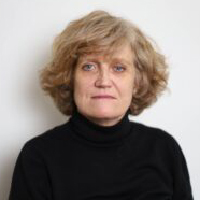
Nancy Sohler, Ph.D., M.P.H.
Associate Medical Professor -
Amr Soliman
Medical Professor