


Month Day Year
Traumatic Brain Injury (TBI) is a leading cause of cognitive impairment among older adults, often resulting in significant declines in memory, executive function, and overall brain health. This is particularly true for U.S. service members and veterans, more than 450,000 of whom have been diagnosed with TBI since 2000 alone. A new clinical trial, led by Junghoon John Kim, PhD, at the CUNY School of Medicine, aims to address these challenges by testing an innovative, non-invasive therapy that could significantly improve cognitive outcomes in this vulnerable population. The U.S. Department of Defense has awarded Dr. Kim $2.2 million over four years to support the study.
Innovative Therapy Targets Long-Term Effects of TBI
TBI-induced cerebral microvascular injury, or damage to the brain’s tiny blood vessels, can reduce blood flow to the brain over time, leading to poor recovery and long-term neurodegenerative diseases like dementia. The good news is that this type of injury may be treatable, which could help improve functioning and quality of life for people with TBI. The proposed study focuses on older individuals diagnosed with TBI, but the study’s findings would eventually apply to military personnel, as well as younger adults, who sustained TBI from sports, falls, or other injuries.
The study will explore the potential of transcranial photobiomodulation (tPBM), a non-invasive therapy that delivers near-infrared light across to a participant’s forehead to increase cerebral blood flow which, in turn, stimulates brain function. While tPBM has shown promising results in pre-clinical models, its effects in individuals living with chronic consequences of TBI have yet to be rigorously tested. This trial seeks to fill that gap, offering hope for patients who face a higher risk of neurodegenerative diseases due to TBI.
Multi-Center Collaboration Aims to Enhance Cognitive Rehabilitation
Drs. Tamara Bushnik, PhD and Dan Iosifescu, MD, both at New York University Grossman School of Medicine are Co-Investigators on this project. Dr. Kim is also working in collaboration with Abubakar Yamin, PhD, who is a research scientist at CUNY Medicine; Jacek Dmochowski, PhD, a biomedical engineer at The City College of New York who pioneered the non-invasive technology under evaluation.
Current cognitive rehabilitation treatments have provided limited benefit, compounded by the fact that aging worsens cognitive challenges, making older adults a uniquely vulnerable group. A recent study in Neurology of more than 188,000 older veterans, TBI was associated with a 60% increase in the risk of developing dementia over nine years, even after accounting for potential confounding factors. The neuropsychological profile of older veterans with a history of TBI is characterized by slowed processing speed and executive dysfunction, highlighting the importance of targeting executive function in Dr. Kim’s study.
“For older adults with TBI, the key is to develop an easy-to-use and well-tolerated treatment with minimal side effects,” said Dr. Kim. “Our goal is to evaluate whether tPBM can enhance brain function and ultimately reduce TBI-induced neurodegeneration.”
Testing Cognitive and Physical Outcomes of tPBM
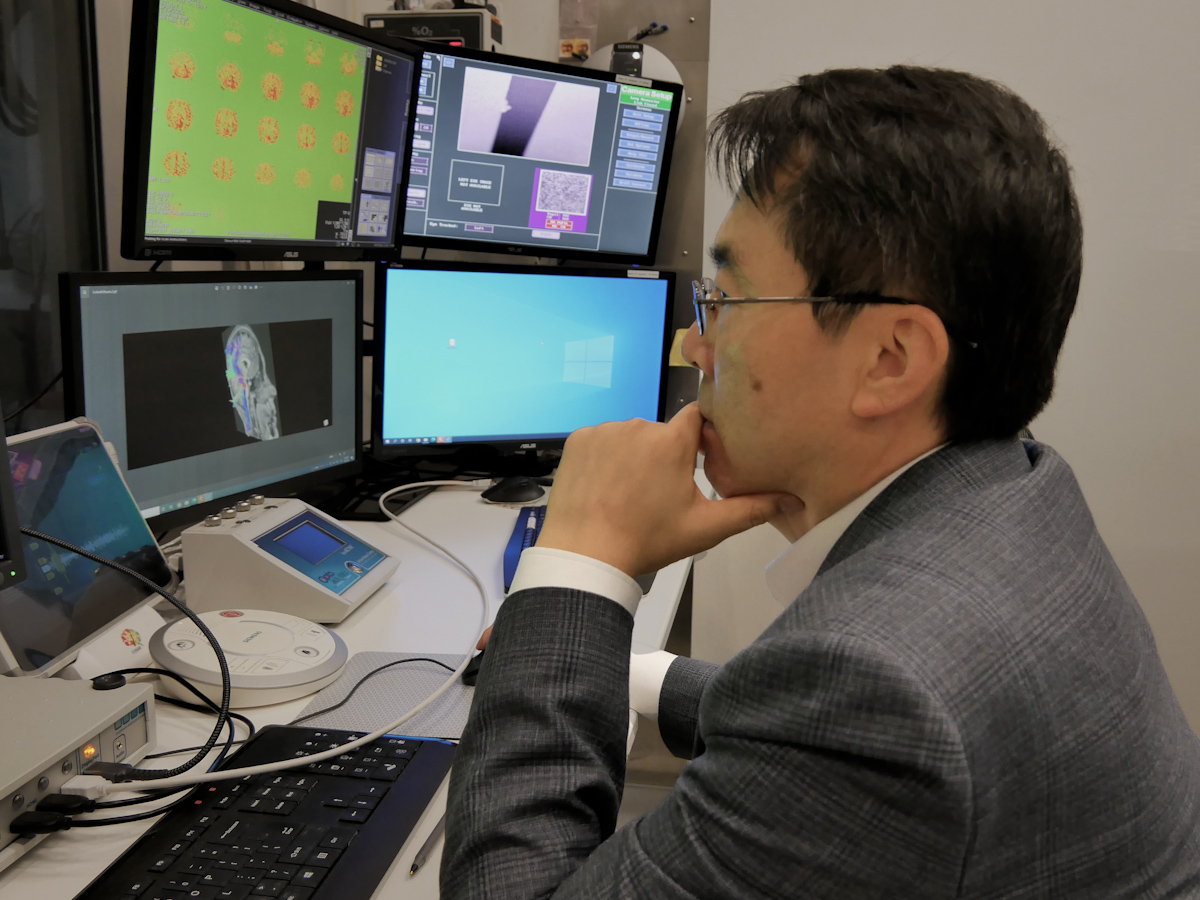
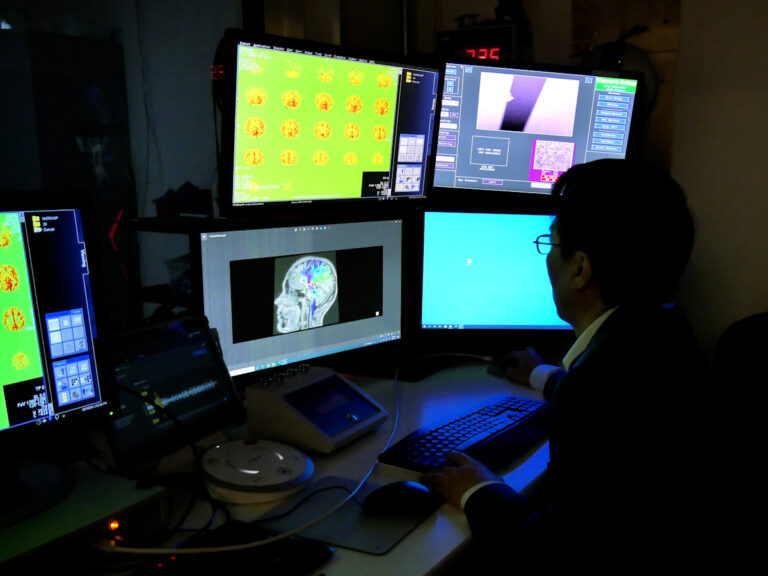
The Phase II randomized double-blind trial will enroll 80 participants, aged 55 and older, who have suffered from chronic TBI. Through MRI imaging technology, it will focus on changes in prefrontal cerebral blood flow and executive function—areas critical to cognitive health. Researchers will also assess the safety, tolerability, and long-term effects of tPBM therapy. Patients will mostly be recruited from Rusk Rehabilitation at NYU Langone Health. Study participants will receive MRI scans over two visits at the CUNY Advance Science Research Center, and over the course of six weeks, they receive either active tPBM therapy or a placebo administered at NYU Rusk Rehabilitation. Participants will also take various baseline clinical and neuropsychological tests which will likewise be administered after treatment to evaluate any changes.
If Dr. Kim’s hypothesis about the curative potential for tPBM treatment shows promise, his research could open up investigations into the development of cost-effective, accessible therapies that can help reduce cognitive decline and improve quality of life for older adults and younger people living with TBI.