

Mandatory Attendance
The CUNY School of Medicine PA Program has a mandatory attendance policy for required activities. PA students are expected to be in attendance for all didactic and clinical activities. The CUNY School of Medicine PA Program’s block schedule specifically includes time when students are not involved in class, lab or other program related activities such that, if needed, students can attend to outside appointments (e.g., medical appointments).
Timely access to services addressing personal issues which may impact student progress in the CUNY School of Medicine PA Program.
The CUNY School of Medicine and the CUNY School of Medicine PA Program are committed to the personal and academic success and well-being of all students, including timely access to services addressing personal issues which may impact progress in the PA program. Although it is ideal if students receive services outside of their classroom hours, and, as noted below, time is included in the schedule for such activities, given the course load in the program this is not always possible. In such cases when timely access is otherwise not possible due to severity, access, or after-hours availability, the CUNY Scholl of Medicine PA Program permits students class release time to receive services from healthcare providers and the Wellness Center – including academic success services, counseling, and curriculum access support services.
Personal Days
Recognizing the incredible time commitment in the didactic phase of the program, and understanding that many students will greatly benefit from a rare day off without risking academic success, the CUNY School of Medicine PA program faculty have adopted a policy permitting one personal day off per semester for didactic phase students. Personal days do not need to be excused by program faculty, but students must adhere to the following:
- A maximum of one personal day per semester is permitted and can only be taken in the didactic-phase fall, spring, summer, and fall semesters.
- Partial personal days (e.g., missing one course) count as full personal days (i.e., time cannot be saved or banked).
- Students are fully responsible for any materials presented on missed days.
- A personal day cannot be taken on the day of any written, practical or lab examinations or on the day before any written, practical or lab examinations.
- A personal day cannot be taken on the day of Clinical Skills lab activities
- A personal day cannot be taken on the day of any group assignment activities in any course.
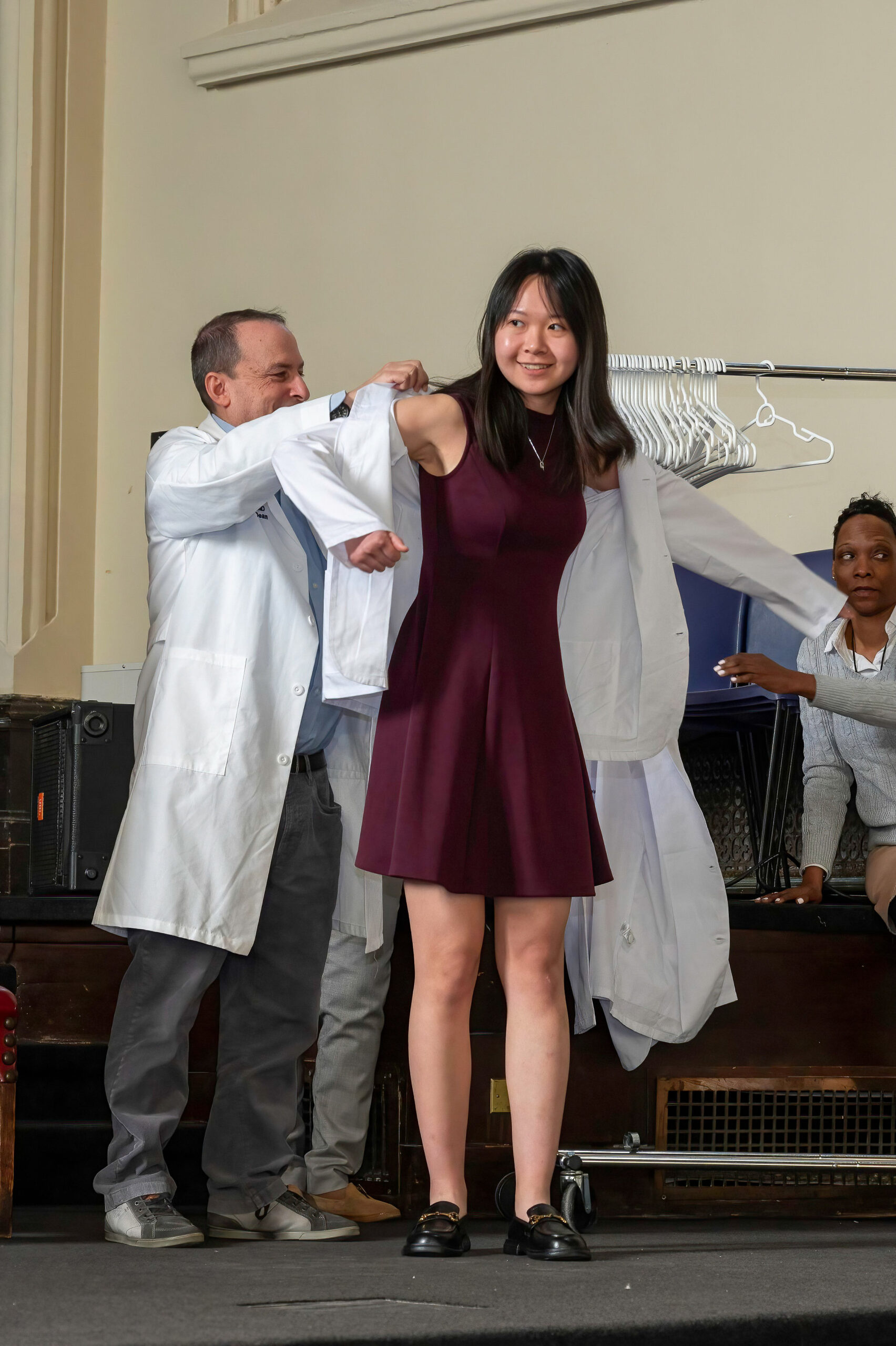
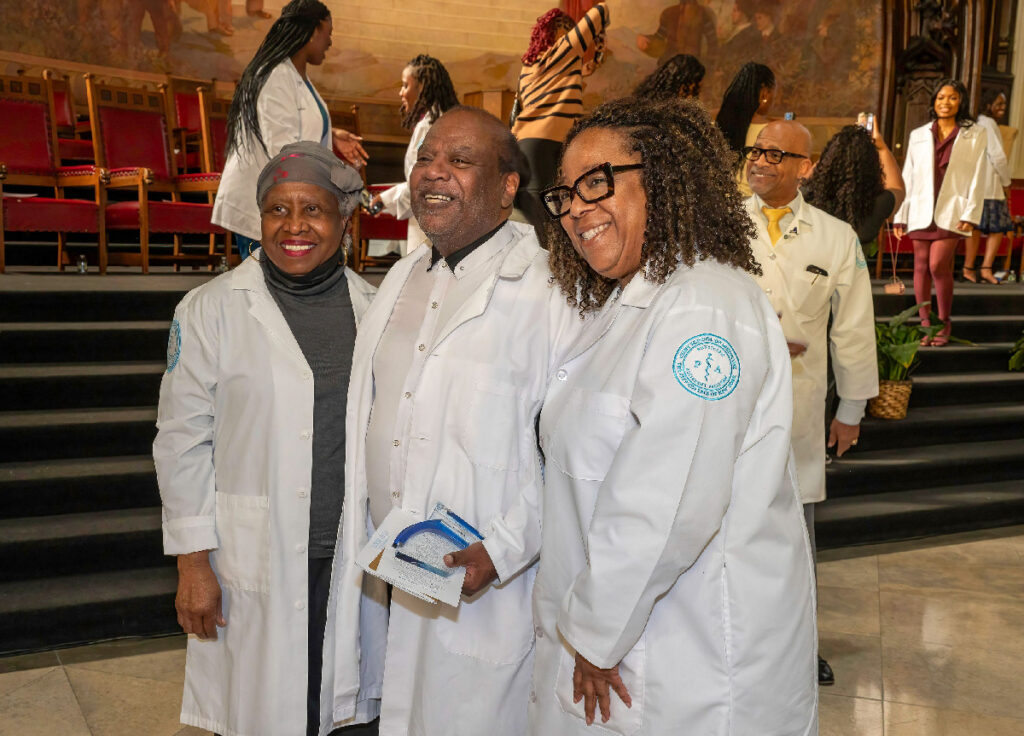
- A personal day cannot be taken during Orientation and the Program’s White Coat Ceremony.
- A personal day cannot be taken during Supervised Clinical Phase Experiences (SCPE) Orientation.
- A personal day cannot be taken in succession with school breaks, School or Program holidays, or requested excused absences.
- Students must still submit the Didactic-Phase Student Absence Form Program Activity Form.
- The Didactic-Phase Student Absence Form Program Activity Form must be submitted to all course directors at least 24 hours in advance of the absence.
- The CUNY School of Medicine PA Program reserves the right to deny personal days for students at risk of or on academic and/or behavioral probation, and for students taking more than one day of absences during one or more semesters.
- Violation of any of the above policies will result in an unexcused absence and enforcement of the CUNY School of Medicine PA Program policies as detailed in the CUNY School of Medicine PA Program Student Handbooks.
- The program reserves the right to place a moratorium on all personal days for all students for any reason.
Absences for Clinical Phase students Job Interviews:
- All attempts must be made to schedule an interview so it does not interfere with the rotation. In the event that this cannot be accomplished, students must first obtain the permission of the Clinical Coordinator to attempt to arrange for an excused absence.
- Students must still submit the Clinical-Phase Student Absence Form Program Activity Form.
- The Clinical-Phase Student Absence Form Program Activity Form must be submitted to all course directors at least 24 hours in advance of the absence.
Absences from Required Activities
Other than posted holidays, semester breaks, personal day, and when released from the program, students should expect to be present on campus from 8:00am to 6:00pm EST, Monday through Thursday and 8:00am – 4:00pm Friday, in addition to one-to-two weekly evening hours for scheduled lectures, sim lab, and service activities, and occasional Saturday hours for make-up classes.
Attendance and Absence Policies Specific to SCPE Coursework
Students are expected to follow arrival-on-site reporting instructions and to notify the program of any changes or difficulties.
A suitable work schedule will be determined by the preceptor or his/her designee and should include at least an average minimum of 40 hours of clinical activities per week, a minimum of (200) hours over the course of the entire five weeks rotation, as determined most appropriate by the preceptor or their designee. The student is required to continue working with the preceptor or their designee for the entire five weeks, according to the preceptor’s (or their designee’s) schedule, even if the 200 hours is completed prior to the end of the scheduled five-week rotation. Students should expect to work any time their preceptor is working to include some nights and weekends on all rotations. Permission from the Clinical Coordinators must be obtained prior to absence from any rotation activities (unless an emergency occurs, please refer to the policy for notifying the program of emergencies while on SCPE’s).
Absenteeism Policies: Excused Absences
- Incapacitating illness or injury, such as those requiring bed rest and unexpected personal or family emergencies are considered valid reasons for absenteeism; however, the procedure for absenteeism must be followed.
- All absences must be made-up with similar activities. All attempts should be made to make-up the time during the same rotation. Otherwise, such absences will result in a grade of “I” (incomplete) for the rotation until the time is made-up at a later date; this may result in delay of graduation. Rotations, in which you receive a course grade of Incomplete due to excused absences, may be completed at a later date, depending on the availability of the rotation and at the discretion of the Clinical Coordinators and preceptors. All such activities may cause a delay of graduation.
- Absences for scholarly and service activities (e.g., attendance at NYSSPA or AAPA conferences) or committee work, may be granted on a case-by-case basis, at the discretion of the Program Director and Clinical Coordinators. Students who wish to attend such activities must submit their intentions in writing to the Clinical Coordinators two months in advance.
- A leave of absence may be granted by the Program Director for extended illness or absence (i.e., >3 days). The Program Director, on an individual basis, will consider all requests for a leave of absence if done prior to failure of a rotation.
Absenteeism Policies: Unexcused Absences and Tardiness
- Absenteeism not reported as outlined above will be considered unexcused regardless of cause.
- As arriving on-time is considered a part of professionalism, tardiness to rotations and/or end-of-rotation events is not acceptable and may be counted as unexcused absences at the discretion of the Clinical Coordinators.
- Unexcused absences are considered a violation of professionalism and subject to consequences up to and including course failure and delay of graduation.
- Chronic tardiness and absenteeism is a violation of professionalism standards and the student will be referred to the Course and Standing Committee.
As the clinical experiences are vital to the PA student’s education, missing clinical experiences represents a significant obstacle to success in the CUNY School of Medicine PA Program. Given this, the Program has developed the following policies specific to unexcused absences in SCPE courses:
The third occurrence will result in a mandatory meeting with the Course & Standing Committee (C&SC) which will result in either course failure or an ‘incomplete’ grade for the course at the discretion of the Clinical Coordinators and the C&SC, and will mandate repeating the SCPE at the end of the year and delaying graduation; note, students are fully responsible for all tuition and fees associated with any delayed course or course activity completion.
The first occurrence will result in a decreased score on appropriate items from the Clinical Coordinator Evaluation of Student Grading Rubric for that specific SCPE course and a mandatory meeting with the Clinical Coordinators.
The second occurrence will result in a mandatory meeting with the Program Director for consideration of placing the student on Professional Probation and either (a) further reductions in score on appropriate items from the Clinical Coordinators Evaluation of Student Grading Rubric if in the same SCPE course or (b) decreased score on appropriate items from the Clinical Coordinators Evaluation of Student Grading Rubric for that specific SCPE course.